
 Picture this:
You’re rinsing vegetables at the main sink. Your partner reaches past you for a pan. Someone opens the fridge behind you. A child wanders in for a snack. Suddenly, everyone is standing in the same tight triangle of space. No one is doing anything wrong — your kitchen simply wasn’t designed for more than one person to move comfortably at a time.
Now the scene shifts.
You’re chopping vegetables at a prep sink on the island. Another person rinses fruit at the main sink. Someone else grabs plates without crossing your path. No bumping. No sidestepping. No tension creeping in. Just an easy rhythm — two or three people moving through the space without friction. This is what a well-designed kitchen island can change.
Before choosing countertops or seating, pause and ask yourself:
- How many people are usually in the kitchen at the same time?
- Do you want separate zones for different tasks?
- Would a second sink change the way the space feels to use?
- Where should people naturally stand, help, or gather?
- What do you want the kitchen to feel like when it’s in use?
A few extra inches… a wider layout… or a thoughtfully placed sink… can completely change the emotional flow of your kitchen.
 What Do You Want Your Island to Do for You?
Once you start noticing how you move through your kitchen, another question naturally follows:
What role do you want your island to play in your daily life? Not the version from a magazine spread. Not the trend of the moment. Your version.
How do your days actually unfold? Do you want room to spread out while you prep and cook? A place where people can gather without getting in your way? Deep drawers that keep counters clear? A prep sink that smooths out your workflow? Seating where someone can linger with coffee while you finish breakfast?
Your island can become:
- a dedicated workstation
- a gathering place
- a storage solution
- a hosting hub
- or a calm center in the busiest room of the house
It doesn’t have to do everything. It just has to support the way you live.
 The Prep Island
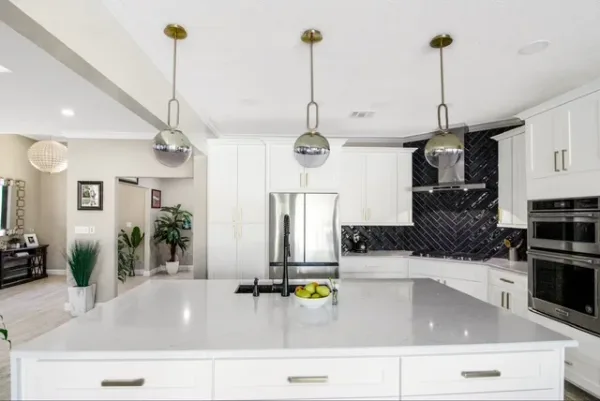
Picture a long stretch of open countertop — wide enough for cutting boards, bowls, ingredients, and sauces — with nothing feeling crowded. You rinse and chop at the island’s prep sink, wipe your hands, and move easily from one task to the next without weaving across the room. Everything is within reach. Nothing interrupts your flow. The island becomes a focused, grounded workspace — a place where cooking feels satisfying instead of rushed.
The Gathering Island
Slow mornings begin here. Someone sits at the island with coffee. A child draws or scrolls nearby. A neighbor stops in for a quick conversation. You’re cooking, but still part of the moment.
The island feels like an open invitation — a place people naturally drift toward, where conversation happens without effort.
It’s no longer just a surface. It becomes the heartbeat of the room.
The Storage Island
Open a drawer and everything is exactly where it belongs. Pots and pans arranged neatly. Cutting boards stored upright. A trash pull-out that glides quietly.
A place for small appliances so counters stay clear. The island does its work quietly in the background, bringing order and ease to the entire kitchen. Less visual noise. More calm.
The Entertainer’s Island
Hosting starts to feel relaxed instead of hectic. You step into the kitchen as friends arrive behind you. The island is already ready — glasses out,
snacks arranged, a beverage fridge softly humming below. People gather there naturally, leaning in to talk, laughing, settling into the evening without crowding your workspace. The island becomes the focal point — where conversations begin and where guests tend to linger.
Choosing the Shape That Fits Your Life
The shape of your island sets the tone for the entire kitchen. A long, elegant rectangle works beautifully in spacious kitchens and for extended prep. A compact square island creates intimacy in smaller spaces. A T-shaped or L-shaped island allows clear separation between cooking and gathering. A curved island softens the room and supports natural movement. In larger kitchens, even two islands can work together — one for function, one for connection. Your kitchen doesn’t need to follow a formula. It needs to follow you.
The Look: What Aesthetic Feels Like Home?
This is where the island becomes expressive.
What tones and textures make you feel grounded when you walk into a space?
- warm wood grain under soft light
- a thoughtful pop of color than brings depth and character
- stone that cascades over the edge in a waterfall detail
- quiet, muted neutrals
- cabinetry with personality
- seating that encourages people to stay
- lighting that creates atmosphere rather than glare
Your island doesn’t just hold things. It holds mood. It sets the emotional tone of the room. It can be subtle. Or it can make a statement.
Envision the Experience
Step back from the details. Not the finishes. Not the measurements. Not the hardware.
How do you want your kitchen to feel when you’re in it?
Calmer?
More open?
More social?
Easier to move through?
Like the true center of your home?
A kitchen island isn’t just a feature. It’s a foundation for how you cook, gather, connect, and live. The best islands aren’t chosen from a showroom. They’re shaped by routines, rhythms, and real life And when your island is designed around the way you live, your whole kitchen begins to feel like it finally fits you.